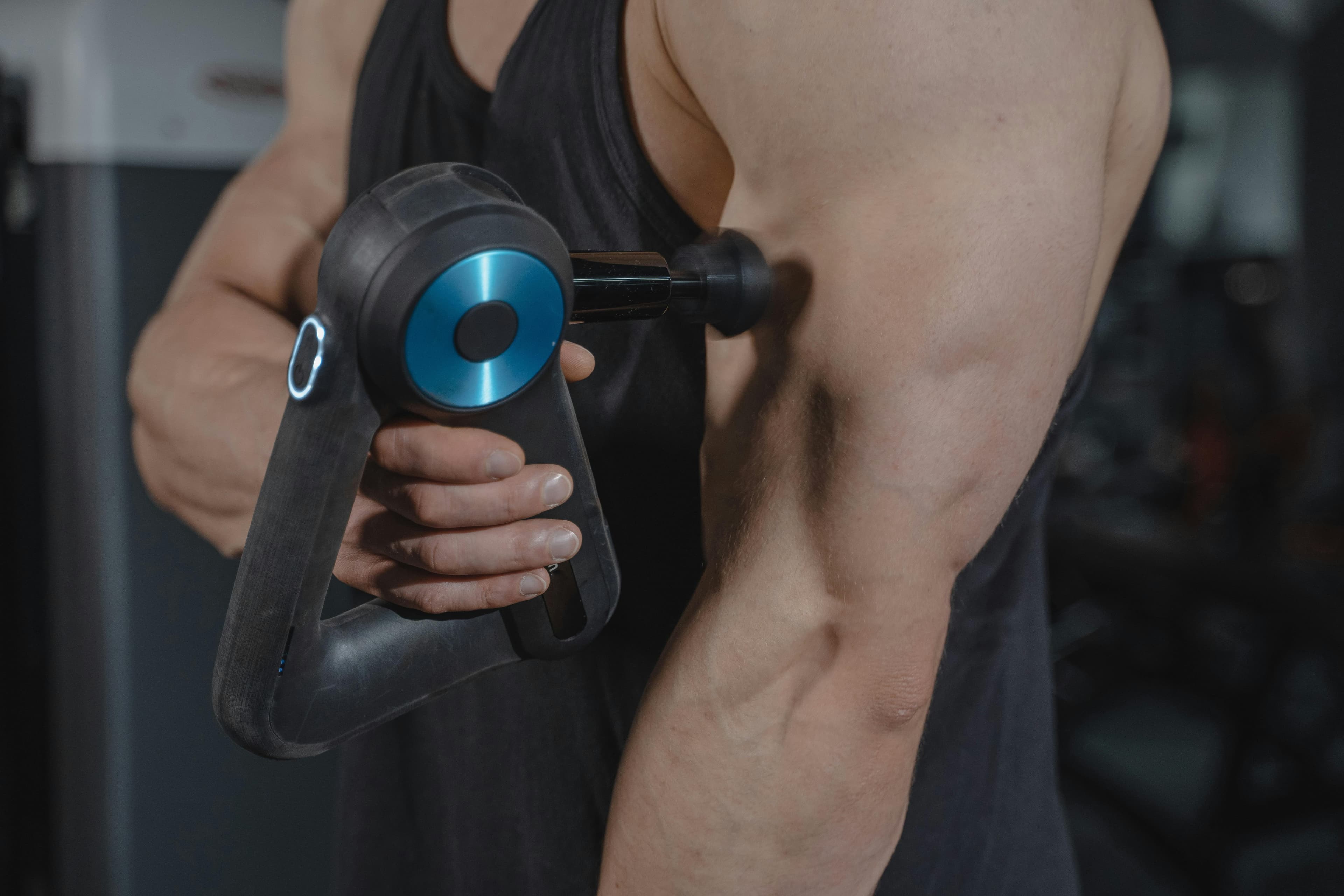
🤔 Do Budget Massage Guns Actually Work?
Short answer: yes — but with limits.
A massage gun under $100 won’t replace a physical therapist or a $400 pro device.
But for everyday soreness, desk tightness, and post-workout stiffness, a good budget model can absolutely help.
The key is understanding what they’re good at — and what they’re not.
🧠 What a Massage Gun Actually Does
Massage guns use percussive therapy:
- rapid pulses
- light-to-moderate depth
- short sessions
What that usually helps with:
- Increased blood flow
- Temporary reduction in muscle tightness
- Feeling “looser” before or after activity
What it does not do:
- Heal injuries
- Fix muscle imbalances
- Replace stretching or strength work
Think of it as a recovery helper, not a cure.
💸 Are Budget Massage Guns Less Effective?
They can be — but not always.
Here’s how budget models typically compare to premium ones:
Where budget massage guns are GOOD
- Daily soreness
- Calves, quads, glutes, forearms
- Desk-related neck & shoulder tension (light pressure)
- Quick 5–10 minute sessions
Where they struggle
- Very deep tissue work
- Extremely tight or dense muscle knots
- Quiet operation at max power
- Consistent force under heavy pressure
This is why choosing the right type matters more than brand hype.
👉 If you want a breakdown of the best value models, see our full guide:
Best Budget Massage Guns Under $100 (2025)
🔍 What Actually Matters Under $100
Ignore most spec sheets. Focus on these instead:
1) Stall force (practical power)
If the gun stops when you press into your quad, it’s not doing much.
You don’t need extreme force — just enough to stay moving under pressure.
2) Ergonomics
A powerful gun you hate holding won’t get used.
Comfortable grip > extra speed levels.
3) Noise
Louder guns get used less — especially in apartments or at night.
4) Attachments (quality > quantity)
You’ll use:
- Ball head (90% of the time)
- Bullet head (occasionally)
The rest are usually extras.
🧩 What Budget Massage Guns Are Best For
Budget massage guns shine in consistency, not intensity.
They’re best if you:
- Sit a lot
- Train recreationally
- Want faster recovery between workouts
- Need something easy to grab for 2–5 minutes
They’re less ideal if you:
- Have a current injury
- Need clinical-level deep tissue work
- Expect instant pain elimination
🧠 How to Use One (So It Actually Helps)
Most people press too hard.
Try this instead:
- Light to moderate pressure
- Slow movement over the muscle
- 30–60 seconds per area
- Stop if you feel sharp pain or numbness
Better results come from short, regular use — not long aggressive sessions.
❌ Common Mistakes
- Using it directly on joints or bones
- Holding it in one spot for several minutes
- Cranking speed to max thinking it’s “better”
- Expecting permanent results from one session
Massage guns help you feel better — they don’t fix everything.
✅ So… Are Budget Massage Guns Worth It?
For most people: yes.
If you:
- want affordable recovery
- don’t need pro-level power
- will actually use it regularly
A good budget massage gun is one of the best value recovery tools you can buy.
👉 For specific recommendations that balance power, noise, and comfort, check our main guide:
Best Budget Massage Guns Under $100 (2025)
❓ FAQ
Can a cheap massage gun damage muscles?
Used incorrectly, yes. Used properly, they’re generally safe for healthy adults.
Is a massage gun better than stretching?
No — they work best together. Massage guns relax tissue; stretching restores range.
How often should I use one?
2–5 times per week is typical. Short sessions work best.


